

ISLAMABAD: Pakistan has accused India of undermining regional stability by allegedly supporting militant groups, including the Tehreek-e-Taliban Pakistan (TTP) and the Balochistan Liberation Army (BLA).
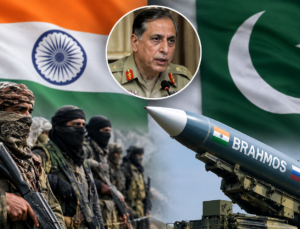
Retired Lt Gen Mazhar Jamil, an adviser to Pakistan’s National Command Authority (NCA), levelled the allegations while speaking at a South Asian Track 1.5 workshop organised by the International Institute for Strategic Studies (IISS) in London on October 13.
Jamil alleged that India was using terrorism as an instrument of state policy and implementing the so-called ‘Doval doctrine’ to destabilise Pakistan. However, the allegations were not independently substantiated.
Citing historical developments, he referred to India’s support for the Mukti Bahini during the 1971 Bangladesh Liberation War and its alleged backing of the Liberation Tigers of Tamil Eelam (LTTE) in the 1980s.
He also pointed to India’s establishment of six consulates in Afghanistan during the International Security Assistance Force (ISAF) mission between 2001 and 2014, claiming these were linked to activities against Pakistan.
BrahMos missile allegations
Jamil further alleged that India had used dual-capable BrahMos missiles during Operation Sindoor, claiming they could carry both nuclear and conventional warheads.
However, the claim remains unsubstantiated. BrahMos is a conventional cruise missile and is not part of India’s Strategic Forces Command, which oversees the country’s strategic nuclear forces.
The remarks highlight continuing tensions between India and Pakistan over regional security, military capabilities and allegations of cross-border support for militant organisations.
Both countries have repeatedly accused each other of actions threatening regional stability. However, claims of Indian support for militant groups and the alleged use of nuclear-capable BrahMos missiles require independent verification.
The allegations come amid broader security concerns in South Asia, where India and Pakistan’s military capabilities and competing narratives continue to shape bilateral relations.
