

Panaji: Union Home Minister Amit Shah on Sunday announced a three-year roadmap to make India “drug-free” by July 2029, calling the fight against narcotics a national security priority of the Modi government.
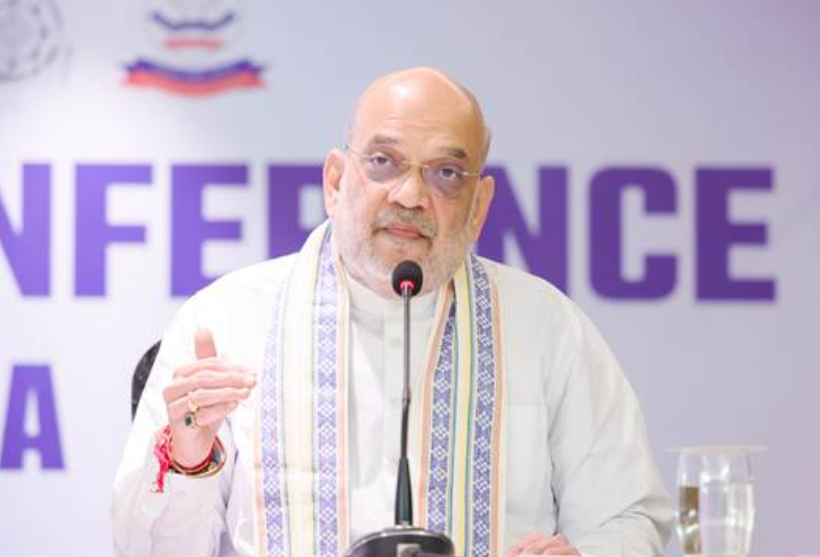
Addressing a press conference in Panaji, Shah said the government would adopt a coordinated approach to dismantle drug networks, disrupt their finances and prevent narcotics from reaching the country’s youth.
Four pillars of anti-drug mission
The roadmap, covering July 2026 to July 2029, will focus on four pillars — intelligence and operation-based enforcement, control of precursor and synthetic drugs, demand and harm reduction, and capacity building and coordination.
Shah said the government has adopted both Bottom-to-Top and Top-to-Bottom investigation approaches to trace drug networks from street-level seizures to their source and from major consignments to their intended destinations.
The strategy will also focus on financial investigations, dark-web transactions, crypto payments and encrypted communications. The government plans to strengthen Anti-Narcotics Task Forces and expand the use of technology and forensic tools.
Drug seizures rise sharply since 2014
Shah said that between 2004 and 2014, around 26 lakh kg of drugs worth ₹40,000 crore were seized. Between 2014 and 2026, he said, seizures increased to more than 1.19 crore kg, valued at around ₹1.89 lakh crore.
During the same period, the quantity of drugs destroyed also rose sharply, from 3.36 lakh kg to 48.68 lakh kg, according to figures cited by Shah.
Under the Nasha Mukt Bharat Abhiyaan, around 25 crore people have been reached and administered a pledge, while 5.7 lakh people have reportedly been freed from addiction through treatment and rehabilitation.
Focus on youth, international networks
Shah said the government aims to triple the number of de-addiction centres to 1,751, with education institutions, NCC, NSS and My Bharat being involved in creating awareness among young people.
He said the government was also targeting international drug routes linked to the “Death Triangle” and “Death Crescent” through a coordinated strategy.
“Just as Naxalism has been eliminated from the country, we will similarly eliminate the problem of drugs,” Shah said, underlining the government’s 2029 target.
