
New PNG incentive scheme aims to make piped cooking gas cheaper, expand household connections

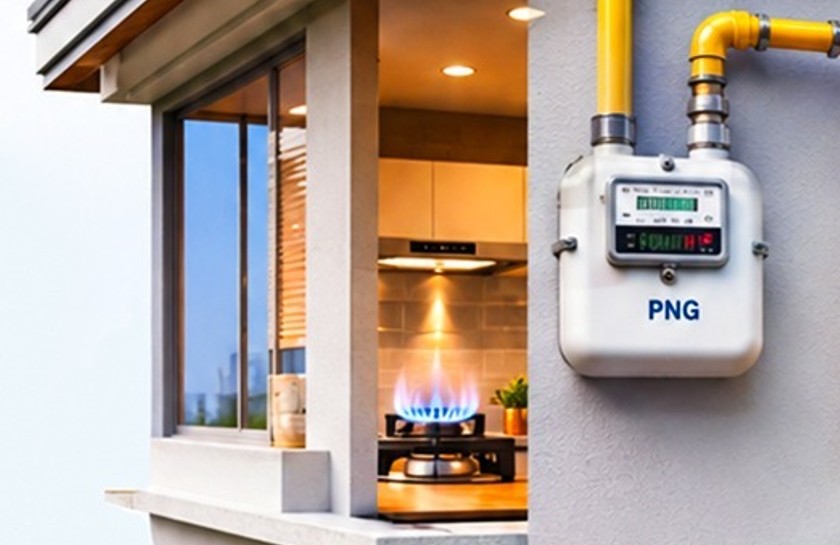
New Delhi: The Centre has rolled out a new incentive scheme to accelerate the expansion of domestic piped natural gas (PNG) connections, with the aim of making clean, safe and affordable cooking fuel more accessible to households across the country.
The Incentive Scheme for Promotion of Domestic PNG Connections came into effect on September 1, 2026, after being launched on August 18. It seeks to encourage City Gas Distribution (CGD) entities to convert inactive or unbilled domestic connections into active, billed connections while expanding pipeline networks into new areas.
As of August 18, India had 1.74 crore domestic PNG connections, with PNGRB-authorised CGD entities operating across 309 geographical areas (GAs) covering the mainland.
Under the scheme, a minimum connection target has been fixed for each GA. CGD entities that add billed domestic connections beyond the prescribed threshold during the performance period will receive an additional allocation of 200 Standard Cubic Metres (SCM) of domestically produced, lower-priced APM gas for every incremental connection.
The additional APM gas is expected to replace costlier LNG currently sourced by CGD entities for their CNG transport operations, reducing their overall gas procurement costs.
According to the government, the incentive could significantly improve the commercial viability of household PNG connections. The payback period on capital invested in a domestic connection is expected to fall from around 10 years to nearly three years, encouraging companies to expand connections faster.
The government is also taking steps to speed up the development of PNG infrastructure. An Accelerated Approval Framework has been introduced under the Natural Gas and Petroleum Products Distribution Order, 2026, along with uniform Right-of-Way charges for laying pipelines.
States have also been encouraged to reduce VAT on natural gas to 5%, with several states already adopting the lower rate.
The government had earlier undertaken National PNG Drive 2.0 from January 1 to June 30, 2026, to accelerate domestic PNG connections.
A unified digital PNG registration portal is also being developed to provide households with a single-window platform for applying for and tracking new connections.
PNG offers households a pipeline-based cooking fuel supply without the need to book, store or replace LPG cylinders. Metered billing allows consumers to pay according to actual usage, while underground low-pressure pipelines reduce the need for cylinder handling and storage.
The government said PNG also produces fewer pollutants than conventional cooking fuels and can provide uninterrupted supply, particularly benefiting households in high-rise buildings and densely populated urban areas.
With the new incentive aligning the commercial interests of CGD companies with the expansion of household connections, the government expects PNG coverage to grow further and reduce dependence on cylinder-based cooking fuel.
