

New Delhi: The Centre has stepped up surveillance, vaccination and disease-control measures to contain Lumpy Skin Disease (LSD) among cattle and buffaloes, with the current situation described as “under control” and 3,461 active cases reported across the country.
The Department of Animal Husbandry and Dairying (DAHD) is coordinating with states and Union territories to monitor the disease and ensure timely vaccination and other containment measures.
More than 36.18 crore cattle have been vaccinated or re-vaccinated against LSD so far, with vaccination drives continuing in affected as well as unaffected states.
States have been advised to prioritise vaccination of heifers and young cattle, along with ring vaccination, movement restrictions, isolation of infected animals, vector control, disinfection and sanitary measures.
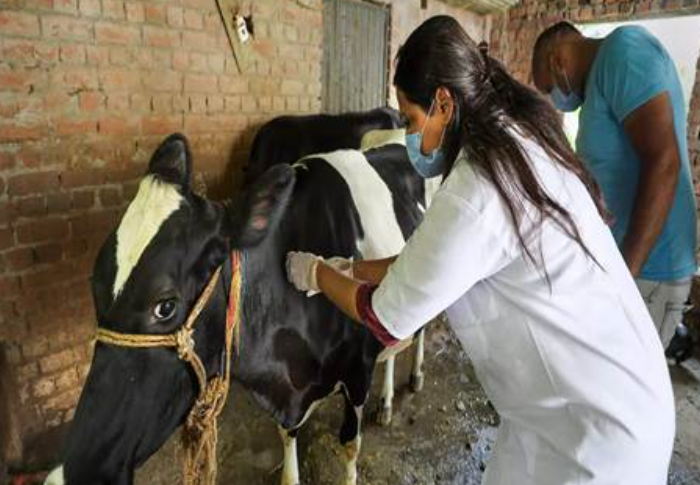
Authorities have also been asked to strengthen the management of stray cattle, quarantine newly introduced animals and ensure timely reporting of suspected cases through official channels.
According to the Centre, sporadic LSD cases have been reported since July, mainly in Uttar Pradesh, Rajasthan, Himachal Pradesh, Haryana, Punjab and Uttarakhand, among other states.
The disease is caused by the Capripox virus and is primarily transmitted by arthropod vectors. It typically causes fever and skin nodules and is generally associated with low mortality.
The Centre said the disease has shown very low severity, with affected animals generally recovering within a week. Young and unvaccinated animals, as well as those with other health conditions, account for most of the active cases.
A Central Expert Team was sent to Uttar Pradesh in August to assess the situation, monitor state-level measures and provide technical guidance. Review meetings with states and UTs were held on August 27 and September 7.
Diagnostic capacity has also been strengthened with support from ICAR-NIHSAD, Bhopal, along with regional and central disease diagnostic laboratories.
The government is providing financial and technical support for vaccination, veterinary laboratory infrastructure, training and awareness programmes, while continuing close monitoring to prevent further spread.
