

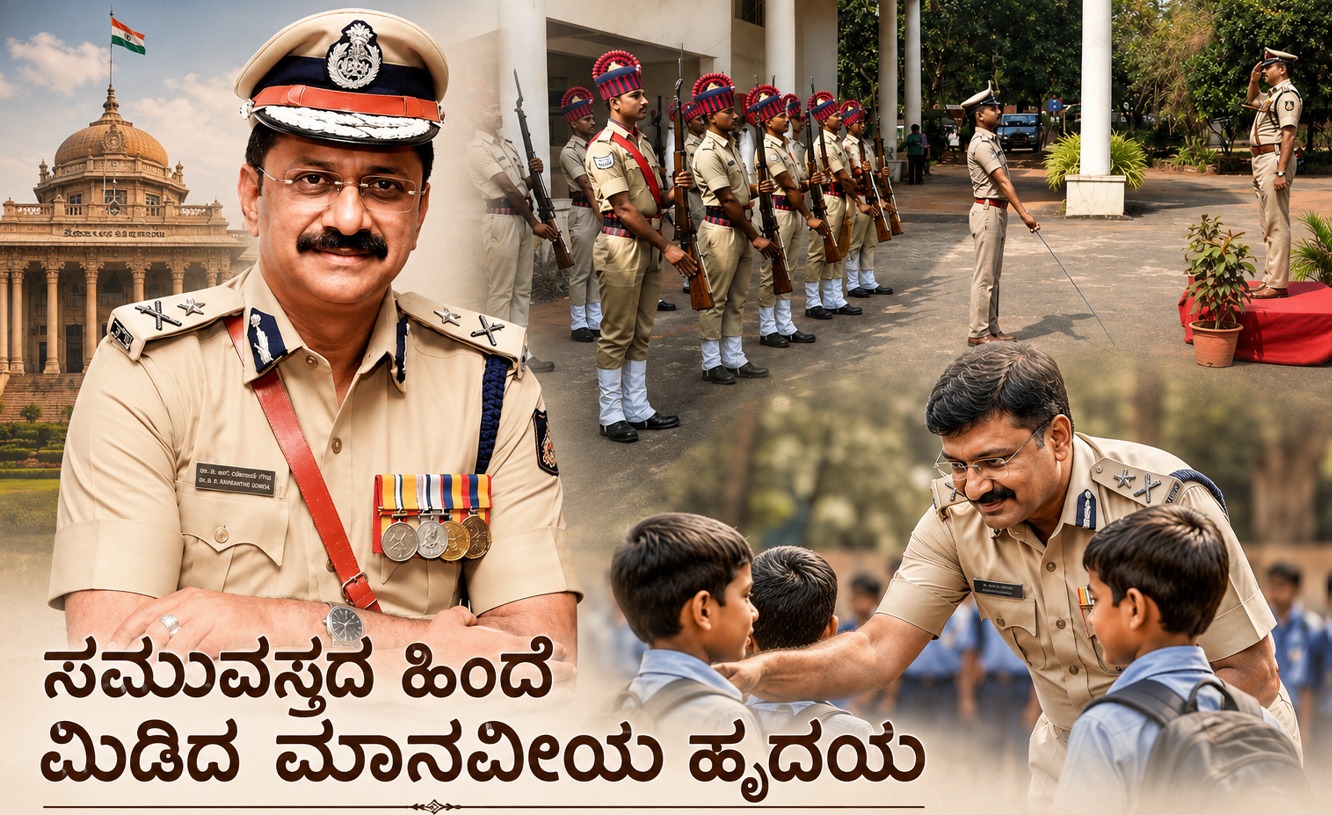
Bengaluru: A police uniform often evokes images of authority, discipline and enforcement. But for Dr B.R. Ravikanthe Gowda, the uniform was also a means to serve people with empathy and compassion.
Born and raised in Mandya, Ravikanthe Gowda joined the Karnataka Police Service in 1997 as a Deputy Superintendent of Police (DySP). Though he had an opportunity to pursue a career as a KAS officer, he chose policing, driven by a desire to work more directly with society.
Over the course of his career, Gowda earned a reputation for combining professional discipline with a strong sense of humanity. His service included several initiatives aimed at improving policing and addressing long-standing challenges within the system.
One of the notable episodes of his career was the action against the illegal liquor network in Hubli’s Kamaripet area, which had remained a source of concern for years. As Superintendent of Police in Belagavi district, he also pushed for changes aimed at moving policing away from practices rooted in the colonial era.
Bringing Kannada into police culture
Gowda’s efforts extended beyond law enforcement. He advocated greater use of Kannada in police parades and slogans, seeking to replace remnants of the British-era policing culture with expressions rooted in the state’s language and identity.
Yet, colleagues who worked closely with him point to another quality as perhaps his defining characteristic — his ability to see the person behind a complaint.
For Gowda, people approaching the police for justice were not merely case numbers or files. He believed their circumstances, struggles and emotions also needed to be understood. This approach earned him the affection of colleagues, some of whom remembered him as an officer with a “mother’s heart”.
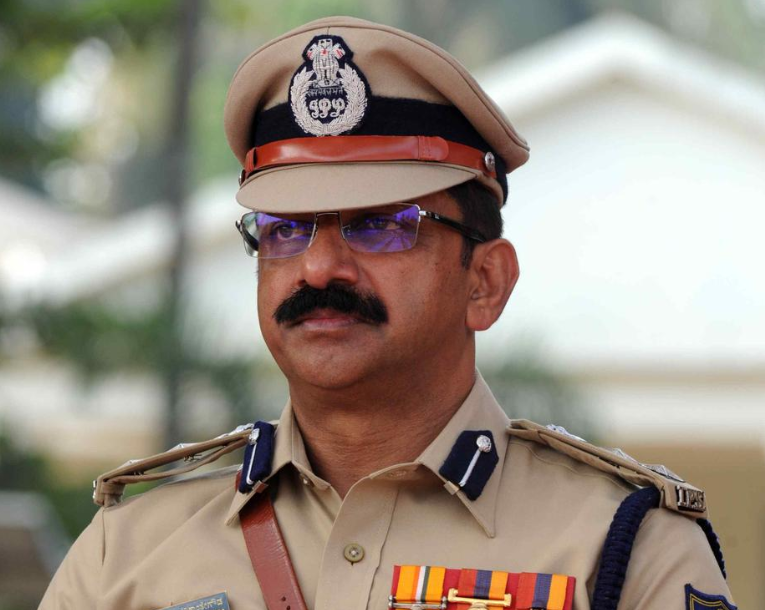
Retired IPS officer Gopal Hosur has particularly highlighted this aspect of Gowda’s personality.
Recalling his association with Gowda, including their time together when Hosur was Deputy Commissioner of Police in the Bengaluru City Police Crime Branch, Hosur described him as “a deep human being behind the uniform.”
Hosur also recalled Gowda’s ability to remain composed while making difficult decisions under pressure, balancing firmness with compassion — a quality he regarded as one of the officer’s defining strengths.
From policing to literature
Gowda’s interests were not confined to policing. An engineering graduate, he completed an M.Tech in Production Engineering from NIE, Mysuru, and also worked as a professor at UVCE.
His long-standing interest in literature eventually took him to Hampi Kannada University, where he earned a D.Litt degree in 2015.
With his retirement from the police service, one chapter of Gowda’s professional life has closed. But his engagement with society, education and literature continues to open another.
As Gopal Hosur observed while reflecting on Gowda’s retirement, the best chapters of his life may still be ahead.
Taking off the uniform may mark the end of a police career. For an officer whose service was shaped as much by empathy as authority, however, it may simply signal the beginning of a different kind of public service.
